
 Posts
Posts


Tuesday, July 14, 2009


Thursday, May 7, 2009
East African Tour
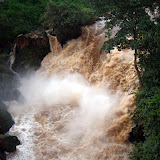
Clockwise around lake Victoria from Tanzania to Rwanda, Uganda, Kenya and back to Tanzania.. here are some pictures:
Things I learned while traveling in East Africa:
I don't mind riding on buses that are moving. I hate sitting on them when they are standing still.
The Avocados may be cheap and big, but there not as good as California (Mexico) Haas avocados.
2 things to see when you go new places: sunsets/rises and lakes/bodies of water (including waterfalls)
Borders don't have to be nightmares. The East African Community made it surprisingly easy for me to travel between it's member nations. And borders are helpful (despite their intangibility) at keeping one apart from wars (in places like the Congo and Burundi for example).
Energy level affects one's perspective. I had the worst cold of my life in Rwanda. two weeks! no place to lie on the couch and watch tv either.. Normally people harassing me on the street doesn't bother me very much, but when I am tired I am much more susceptible to the frustrations of being the only person with white skin on an African street.
Gin/Waragi/Cane liquor sold is sold in plastic bags..
Malaria is scary. I think this is mostly because there are so many theories about it going around. Other diseases (and there are many) are scary too but you hear so many different things about malaria that it has its own mystique. The incubation period is 14 days to a year (I don't think this is really true, I think some guy cheated on his wife in southeast Asia got malaria while he was there, but told her he must have gotten it on their trip to Brazil or whatever..) No one (even doctors) ever tell me the same things about malaria; how prevalent it really is, how bad it is, what anopheles mosquitoes look like, whatever.. I am taking my Lariam.
I don't think I changed as a person very much on this trip, but I am getting old and I have wised up to a few things.
 |
| east africa |
Things I learned while traveling in East Africa:
I don't mind riding on buses that are moving. I hate sitting on them when they are standing still.
The Avocados may be cheap and big, but there not as good as California (Mexico) Haas avocados.
2 things to see when you go new places: sunsets/rises and lakes/bodies of water (including waterfalls)
Borders don't have to be nightmares. The East African Community made it surprisingly easy for me to travel between it's member nations. And borders are helpful (despite their intangibility) at keeping one apart from wars (in places like the Congo and Burundi for example).
Energy level affects one's perspective. I had the worst cold of my life in Rwanda. two weeks! no place to lie on the couch and watch tv either.. Normally people harassing me on the street doesn't bother me very much, but when I am tired I am much more susceptible to the frustrations of being the only person with white skin on an African street.
Gin/Waragi/Cane liquor sold is sold in plastic bags..
Malaria is scary. I think this is mostly because there are so many theories about it going around. Other diseases (and there are many) are scary too but you hear so many different things about malaria that it has its own mystique. The incubation period is 14 days to a year (I don't think this is really true, I think some guy cheated on his wife in southeast Asia got malaria while he was there, but told her he must have gotten it on their trip to Brazil or whatever..) No one (even doctors) ever tell me the same things about malaria; how prevalent it really is, how bad it is, what anopheles mosquitoes look like, whatever.. I am taking my Lariam.
I don't think I changed as a person very much on this trip, but I am getting old and I have wised up to a few things.
Tuesday, April 28, 2009
Islam
I figured I'd covered the other major monotheistic traditions..
I don't think you can call Tanzania a Muslim country, there isn't sharia or anything, but there are definitely a lot of Mosques and men walking around in kufis especially on the coast. One might think there would be a level of uncomfortabilty being a an American Jew and all (the embassy was bombed here btw), but most people seem tolerant even if I am the only person walking around in shorts. Reading Infidel surrounded by believers was a little awkward, but your English has to be pretty good to read over someone's shoulder. I wonder what Ayaan Hirsi Ali would have to say about a country like Tanzania; it seems like a pretty liberal form of Islam to me:
I think it would be difficult to be a conservative Muslim in a country like Tanzania. There are quite a few women walking around in hijabs, despite the heat, but they have to ride dalla-dallas like everyone else. While I may not be able to see anything but their eyes, I get a pretty good idea that there are women beneath all that cloth when I am squeezed between two of them in the back of truck.
Furthermore, the Call To Prayer is nothing compared to the orthodox chanting in Ethiopia. Sometimes the morning prayers wake you up a little early in the morning, but it's over before you know it. Just put your pillow over your head and go back to sleep.
Then there are the Rastas (we had them in Ethiopia too). They tend to congregate at the coast as well, most were raised in Muslim families and consider themselves Muslim. This apparent contradiction was explained to me on a beach in Zanzibar with the dubious rationale that, "Rastafarianism isn't really a religion." I guess in the Tanzanian sense this is true; I think the real reason for the dreads and the red,black, green and gold is so that mzungus can know who to buy bangi from.
Moderate Islam.
You can buy cigarette lighters with Osama's picture on them.. they are finally embracing capitalism now too.
I don't think you can call Tanzania a Muslim country, there isn't sharia or anything, but there are definitely a lot of Mosques and men walking around in kufis especially on the coast. One might think there would be a level of uncomfortabilty being a an American Jew and all (the embassy was bombed here btw), but most people seem tolerant even if I am the only person walking around in shorts. Reading Infidel surrounded by believers was a little awkward, but your English has to be pretty good to read over someone's shoulder. I wonder what Ayaan Hirsi Ali would have to say about a country like Tanzania; it seems like a pretty liberal form of Islam to me:
I think it would be difficult to be a conservative Muslim in a country like Tanzania. There are quite a few women walking around in hijabs, despite the heat, but they have to ride dalla-dallas like everyone
 else. While I may not be able to see anything but their eyes, I get a pretty good idea that there are women beneath all that cloth when I am squeezed between two of them in the back of truck.
Furthermore, the Call To Prayer is nothing compared to the orthodox chanting in Ethiopia. Sometimes the morning prayers wake you up a little early in the morning, but it's over before you know it. Just put your pillow over your head and go back to sleep.
Then there are the Rastas (we had them in Ethiopia too). They tend to congregate at the coast as well, most were raised in Muslim families and consider themselves Muslim. This apparent contradiction was explained to me on a beach in Zanzibar with the dubious rationale that, "Rastafarianism isn't really a religion." I guess in the Tanzanian sense this is true; I think the real reason for the dreads and the red,black, green and gold is so that mzungus can know who to buy bangi from.
Moderate Islam.
You can buy cigarette lighters with Osama's picture on them.. they are finally embracing capitalism now too.
Thursday, April 23, 2009
The Last Supper
I'm not very Jewish. I don't go to temple. I am anti-Israel. I never set foot in a synago gue. My knowledge of Yiddish is very limited. I don't have many Jewish friends. Most of what I know about passover I learned from Charleton Heston.. I didn't even get BarMitzvahed. And I definitely didn't know that they had Jews in Uganda. But there are, and I don't mean Holocaust escapees selling bagels in Kampala, these guys are actual Ugandan Jews. The reason I know this is because about a week ago I spent Passover with them.
You might be wondering how such a unJewish person such as me ended up spending Pesach with black Jews in Uganda.. You have to blame my friend Shira for that one. I didn't really know what I was getting myself into, but it was definitely an interesting cultural experience.
 gue. My knowledge of Yiddish is very limited. I don't have many Jewish friends. Most of what I know about passover I learned from Charleton Heston.. I didn't even get BarMitzvahed. And I definitely didn't know that they had Jews in Uganda. But there are, and I don't mean Holocaust escapees selling bagels in Kampala, these guys are actual Ugandan Jews. The reason I know this is because about a week ago I spent Passover with them.
You might be wondering how such a unJewish person such as me ended up spending Pesach with black Jews in Uganda.. You have to blame my friend Shira for that one. I didn't really know what I was getting myself into, but it was definitely an interesting cultural experience.
There were a fair amount of mzungus there, mostly Israeli but a bunch on Americans too. In reality there was quite a range of Juadism on display, many Israelis aren't religious and there were even some gentile junior-year-abroad (SIT) kids who were just there with their friends. This made me feel a little better about myself. Overall I felt about as out of place as I usualy do when I'm around real Jews on a high holiday; they were all using w ords I don't know mixed in with their regular conversations, and singing songs I didn't know the words to (or even the language). In fact with these things it's probably better I don't speak Hebrew, I would have felt more uncomfortable if I was more than passingly aware of the fact that all the throat clearing and babbling meant "O' God.." , "Master of the Universe.." etc.
 ords I don't know mixed in with their regular conversations, and singing songs I didn't know the words to (or even the language). In fact with these things it's probably better I don't speak Hebrew, I would have felt more uncomfortable if I was more than passingly aware of the fact that all the throat clearing and babbling meant "O' God.." , "Master of the Universe.." etc.
There were some things that were different than your average American Seder (other than all the black people). They didn't give out yarmulkes at the door, not even the paper ones. There was no matzo-ball soup. There wasn't even any wine. Those last two really hurt. And many things were pretty similar to what I remember from their American counterparts; most people weren't listening to the rabbi, other people were just moving their lips during the songs too, and most of all we skipped 80% of the haggadah (just like home).

And that's how I ended up spending one of the holiest days of the year with the Jews of Uganda. Getting there was really the hardest part. I had to check out a VGIF site the day before, so I had split up with Shira and had to find my way there by myself. I got to the town of Mbale and asked a moto-taxi to take me to "Moses Synagogue", he said, "sure" we agreed on a price and of course he had no idea where we were going (in his defense, Jews are a few kilometers from town hidden away safe from the gentiles). Though he repeated "Moses Synagogue" like a pro, he didn't have a clue what I was talking about. I told him, "take me to the Jews". He had at least heard about them, and we headed off in their general direction. It turned  out that he was an Evangelical Christian and he spent most of the ride trying to convert me.. He didn't have much luck with that, but after asking "Which way to the Jews?" to a half-dozen people, and a couple wrong turns later I was staring at a big star of David, and I knew I was in Abayudaya..
 out that he was an Evangelical Christian and he spent most of the ride trying to convert me.. He didn't have much luck with that, but after asking "Which way to the Jews?" to a half-dozen people, and a couple wrong turns later I was staring at a big star of David, and I knew I was in Abayudaya..
Overall it was definitely an interesting experience. The location was great, beautiful sunset views I ate some Matzo. I am Jewish after all.
Friday, April 17, 2009
The Rolex

As a traveller there is rarely much access to kitchen facilities or the financial incentive to use them. So to avoid paying mzungu prices for substandard food one needs to eat closer to what the local population eats (i.e. paying local prices for substandard food). Most people in the world however cannot afford to eat in restaurants, so there is an apparent dilemma.
Thankfully this restaurant problem is overcome by stepping out of the restaurants and into the street. If you don't want to pay the dollar or two it costs to sit down in a local restaurant you can eat while standing for half the price. Unfortunately street food is not always very conduc ive to vegetarianism, often greasy meat is one of its primary ingredients. In Uganda this problem is overcome by the ubiquity of chapatis. The chapati in East Africa is a little different than its Indian counterpart; they are bigger and appear to use less whole wheat flour (though I think they use some!) and are cooked on a hot iron with a little oil. They are delicious and cost less than 25cents.
 ive to vegetarianism, often greasy meat is one of its primary ingredients. In Uganda this problem is overcome by the ubiquity of chapatis. The chapati in East Africa is a little different than its Indian counterpart; they are bigger and appear to use less whole wheat flour (though I think they use some!) and are cooked on a hot iron with a little oil. They are delicious and cost less than 25cents.
 In Uganda the chapati has even been improved on with the invention of the Rolex. A ro lex is simply a fresh chapati rolled up with an omelet with a few vegetables thrown in (hot sauce, salt and ketchup to taste). A delicious and nutritious meal for less than 50cents. Some places even have avocado! Needless to say I am a big fan. The only shortcoming is that the griddles don't usually get fired up until after dark, and while they are an amazing late night snack, they would be a perfect breakfast as well..
 lex is simply a fresh chapati rolled up with an omelet with a few vegetables thrown in (hot sauce, salt and ketchup to taste). A delicious and nutritious meal for less than 50cents. Some places even have avocado! Needless to say I am a big fan. The only shortcoming is that the griddles don't usually get fired up until after dark, and while they are an amazing late night snack, they would be a perfect breakfast as well..
Thursday, April 9, 2009
Rwanda Recap
Rwanda has it together a little more than most of the countries I've been to. Kigali is reasonably cosmopolitan; cafes, nightlife, cheap internet.. it has it all. The rest of the country isn't quite caught up yet, but it is on it's way. The roads are excellent (paved and sans potholes), and they appear to enforce traffic laws. And the buses are great. They even run on a schedule! One time I got on a half-full bus and it departed when it was supposed to despite the fact that there was not only breathing room, but actual empty seats. Miraculous. If you are investing in East Africa, I recommend Rwanda.
It really isn't that backpacker friendly though. I didn't have a good guidebook, I may have missed out on some hidden gems, but overall I don't think I am the clientele that the country is looking for. They charge outrageous prices for national parks. Not just $500 to spend an hour with mountain gorillas, but 75 to go on a hike.. And I don't really have a problem with them taking money off wazungu, but it would be nice if there was some level of service provided and they weren't trying to nickel and dime you for extras the whole time. Once you got off the beaten track a little bit there isn't much to do or see. Kigali and Buta re (a nice little university town) had a lot of white people running around (a lot of aide dollars are definitely flowing), but in the countryside I was usually the only mzungu. There was a lot of staring (not just kids). Rwanda does not have an overabundance of things a tourist might be interested in, and what little there is, is expensive.
It was an interesting place though. The countryside is beautiful, even more heavily cultivated than Ethiopia, nice, cool, green terraced hills, and the food was pretty good. The genocide of course was always in the back of my mind as well. I couldn't help but think about how old each person I met was 15 years ago. To their credit the country really does seem better off then their conflict free neighbor, Tanzania. But being within spitting distance of the D.R.C. the specter of conflict was still present (there really was a noticeably heavy amount of air traffic going in and out of Goma).
Then their was the French issue. I really felt like an ignorant tourist most of the time I was there. I couldn't speak a word of the local language (Kinyarwanda ), and if a person spoke a little of a colonizers language, they were usually francophone. They couldn't understand, I have white skin, but I couldn't speak French.. They are trying to move to English in the schools, but they are not there yet. Outside of Kigali and Butare, people spoke very little English. I realize, I, not them, am to blame for being mono-lingual.
Overall I think Rwanda would be a pleasant place to live (especially if you have a cushy USAID job), but it shouldn't be first on your East Africa list to visit (Uganda, where I am now is a backpacker paradise btw). The ATM situation is a good microcosm for the country as a whole. In every other country I've been to, ATMs that accept Mastercard and Visa are ubiquitous, even in small towns, and they have been my source of currency throughout my trip (love my Cambridge Savings Bank card that doesn't charge any ATM fees). However in Kigali (the most expensive place I've been) I had to get a cash advance (with the accompanying fee). After an extended search I am confident that there is not one ATM in Rwanda that accepts foreign cards. I can only assume this is because the government is trying to gouge credit card companies with some tariff or another. I understand their desire to make money off rich foreigners, but even I (registered green) think the free market could do some good towards this end.
It really isn't that backpacker friendly though. I didn't have a good guidebook, I may have missed out on some hidden gems, but overall I don't think I am the clientele that the country is looking for. They charge outrageous prices for national parks. Not just $500 to spend an hour with mountain gorillas, but 75 to go on a hike.. And I don't really have a problem with them taking money off wazungu, but it would be nice if there was some level of service provided and they weren't trying to nickel and dime you for extras the whole time. Once you got off the beaten track a little bit there isn't much to do or see. Kigali and Buta
 re (a nice little university town) had a lot of white people running around (a lot of aide dollars are definitely flowing), but in the countryside I was usually the only mzungu. There was a lot of staring (not just kids). Rwanda does not have an overabundance of things a tourist might be interested in, and what little there is, is expensive.
It was an interesting place though. The countryside is beautiful, even more heavily cultivated than Ethiopia, nice, cool, green terraced hills, and the food was pretty good. The genocide of course was always in the back of my mind as well. I couldn't help but think about how old each person I met was 15 years ago. To their credit the country really does seem better off then their conflict free neighbor, Tanzania. But being within spitting distance of the D.R.C. the specter of conflict was still present (there really was a noticeably heavy amount of air traffic going in and out of Goma).
Then their was the French issue. I really felt like an ignorant tourist most of the time I was there. I couldn't speak a word of the local language (Kinyarwanda ), and if a person spoke a little of a colonizers language, they were usually francophone. They couldn't understand, I have white skin, but I couldn't speak French.. They are trying to move to English in the schools, but they are not there yet. Outside of Kigali and Butare, people spoke very little English. I realize, I, not them, am to blame for being mono-lingual.
Overall I think Rwanda would be a pleasant place to live (especially if you have a cushy USAID job), but it shouldn't be first on your East Africa list to visit (Uganda, where I am now is a backpacker paradise btw). The ATM situation is a good microcosm for the country as a whole. In every other country I've been to, ATMs that accept Mastercard and Visa are ubiquitous, even in small towns, and they have been my source of currency throughout my trip (love my Cambridge Savings Bank card that doesn't charge any ATM fees). However in Kigali (the most expensive place I've been) I had to get a cash advance (with the accompanying fee). After an extended search I am confident that there is not one ATM in Rwanda that accepts foreign cards. I can only assume this is because the government is trying to gouge credit card companies with some tariff or another. I understand their desire to make money off rich foreigners, but even I (registered green) think the free market could do some good towards this end.
Monday, April 6, 2009
The Obama Factor
Americans have long suffered from a (deservedly) negative image abroad. The fat, ignorant, loud American complaining about the lack of Wendy's in Paris is a tough caricature to overcome. However over the past eight years George W. Bush has successfully helped Americans get beyond this stereotype. The rest of the world became so focused on the destructive policies our government chose to pursue that they forgot all about their previous reasons to revile us.
During the course of previous travels, while not universally shunned, I definitely left the assumption of my Canadian citizenship uncorrected (People never wanted to offend Canadians by asking if they were American). As I have mentioned before, the Obama election and inauguration gets a lot of play in this part of the world. And one tangible effect of the Obama administration so far is that it's a lot easier to tell the truth about the color of my passport.

Especially during the election and around the inauguration pretty much every person's response to the "Where are you from?" reply was "Obama!" or "Obamaland", "Obamacountry" or some other corruption of the name of the hour. And the positive reactions are not just from locals. Even my fellow travelers (mostly European) were caught up in Obama fever. The fervor has died down a little, but I'll be in Kenya soon and I know they are proud of their native grandson..
Inevitably the question I get nowadays is, "How's he doing?" People even ask me this knowing full well that I haven't set foot in the good ol' U.S. of A. since September. I generally try to lower people's expectations and remind them that he is still a politician after all. However, amazingly despite all of the goodwill he is generating, very few people have told me they expect him to start handing out visas. The American presidency is a largely symbolic position, and in this respect President Obama is already an unequivocal success.
Now that I am headed home soon, he'll have to start working on the economy.
Thursday, April 2, 2009
The Paper
I like to read the newspaper. I always felt bad for myself living in the Bay Area that there was no good paper. Especially given the relative literacy of San Francisco and Berkeley, the SF Chronicle is atrocious, and the Oakland Tribune and Contra Costa Times don't even qualify. I never liked reading on a computer screen, so my only saving grace was the fact that one can get the New York Times delivered anywhere in the country.
I have come to know a new level of unreadable while traveling in East Africa. There have been English language newspapers readily available in every country I have traveled in, and uniformly, they have been terrible. Not only are they full of grammar mistakes and misspellings (I realize the writers may not be native speakers, but they could still use a spellchecker), the content is unconscionable.
They are mostly full of opinion pieces, that either have nothing to say, are idiotic or offensive. I read an article that implied a women was raped because of what she was wearing. I read another op-ed saying the problem with Tanzanian schools is that the teachers are lazy, and they should be punished like their students. There was a regular section in one paper giving love advice, and the premise of the response to one lovelorn reader was that you can't be mad at your boyfriend for cheating, because men can't possibly only be with one woman (I only assume it was regular based on it's format, I would not waste the energy it takes to turn its pages again).
Despite the general dearth of reading material, I have given up on newspapers completely. Even when they are sitting on a table in a cafe I resist the urge to pick them up because I know I will be disappointed. I think they literally makes you stupider. Thank God for the internet, yes I do now read nytimes.com. I have even resorted to dated issues of The Economist, and the business section used to be my least favorite section, there isn't even sports in the back..
I have come to know a new level of unreadable while traveling in East Africa. There have been English language newspapers readily available in every country I have traveled in, and uniformly, they have been terrible. Not only are they full of grammar mistakes and misspellings (I realize the writers may not be native speakers, but they could still use a spellchecker), the content is unconscionable.
They are mostly full of opinion pieces, that either have nothing to say, are idiotic or offensive. I read an article that implied a women was raped because of what she was wearing. I read
 another op-ed saying the problem with Tanzanian schools is that the teachers are lazy, and they should be punished like their students. There was a regular section in one paper giving love advice, and the premise of the response to one lovelorn reader was that you can't be mad at your boyfriend for cheating, because men can't possibly only be with one woman (I only assume it was regular based on it's format, I would not waste the energy it takes to turn its pages again).
Despite the general dearth of reading material, I have given up on newspapers completely. Even when they are sitting on a table in a cafe I resist the urge to pick them up because I know I will be disappointed. I think they literally makes you stupider. Thank God for the internet, yes I do now read nytimes.com. I have even resorted to dated issues of The Economist, and the business section used to be my least favorite section, there isn't even sports in the back..
Tuesday, March 24, 2009
Thoughts about Food
As a vegetarian traveling in countries where vegetarianism (by choice) is not the norm, one does not expect to find much in the way of culinary excitement. Especially when you get off the beaten track a little bit. At the further detriment to my diet is my habit of 12hour bus journeys which pretty much limits both breakfast and lunch to meals one can buy through the bus window. In Tanzania when these days were more common, most of my protein came from peanut s, and carbs from biscuits (they call cookies, biscuits here [pronounced: 'bis-quit'] which makes them much easier to eat for breakfast). Plus the occasional banana, and of course a multi-vitamin every morning to balance it off. Dinners I am at least not usually in motion.
In Tanzania it was a lot of rice and beans, but that was fine, because I like rice and beans. When there was a little local spinach or some fresh chapatis I was pretty content. What makes all the difference is the hot sauce. And hot sauce is ubiquitous, but I've found it varies quite considerably by country. Despite the dozens of tribal and ethic groups within these haphazard borders created by spurious European conquistadors, it seems that pili-pili is truly unified nationally. In Tanzania the hot sauce was pretty mediocre, heavily processed, in ketchup looking containers, light colored, but quite adequate; it got the job done. In Malawi on the other hand, the hot sauce was exceptional. There is a local brand called Nali, made from "birdseye" peppers, that had a great flavor, they even have a garlic variety (pictured). Unfortunately in Rwanda the hot sauce is uniformly terrible. Even house-made stuff still has this distinct terrible taste, that is shared by all Rwandan hot sauce. It is hot, but the flavor is revolting. Fortunately, Rwandan food has other things going for it.
Rwanda like everywhere else I've been is pretty big on meat. I'm sure most Rwandans would choose to eat meat at every meal if they could afford it. However, another thing that seems to be very popular is buffets. I'm not sure if this is a Franco/Belgian thing left over from colonialism (the word sounds French to me, but it's hard to imagine Parisians digging into the steam tables like there counterparts here at the equator) or a homegrown institution, but they are widespread. And not only are they cheap, to be successful they have to have a lot of dishes, and that means vegetables! They aren't all the best quality, but after a strict rice and beans diet (which even I get tired of if it's more than once a day), the variety (if not the hot sauce) is the spice of lunch (sorry).
I am still refining me buffet dish selection process (these buffets are not to be confused with their American "all you can eat" cousins, you pay by the plate, so visual decision making is key), but suffice it to say that I am eating a far greater variety of plant species. And though I am still religiously taking my vitamins, Rwandan is of course the place that I got my first cold since Ethiopia..
 s, and carbs from biscuits (they call cookies, biscuits here [pronounced: 'bis-quit'] which makes them much easier to eat for breakfast). Plus the occasional banana, and of course a multi-vitamin every morning to balance it off. Dinners I am at least not usually in motion.
In Tanzania it was a lot of rice and beans, but that was fine, because I like rice and beans. When there was a little local spinach or some fresh chapatis I was pretty content. What makes all the difference is the hot sauce. And hot sauce is ubiquitous, but I've found it varies quite considerably by country. Despite the dozens of tribal and ethic groups within these haphazard borders created by spurious European conquistadors, it seems that pili-pili is truly unified nationally. In Tanzania the hot sauce was pretty mediocre, heavily processed, in ketchup looking containers, light colored, but quite adequate; it got the job done. In Malawi on the other hand, the hot sauce was exceptional. There is a local
 brand called Nali, made from "birdseye" peppers, that had a great flavor, they even have a garlic variety (pictured). Unfortunately in Rwanda the hot sauce is uniformly terrible. Even house-made stuff still has this distinct terrible taste, that is shared by all Rwandan hot sauce. It is hot, but the flavor is revolting. Fortunately, Rwandan food has other things going for it.
Rwanda like everywhere else I've been is pretty big on meat. I'm sure most Rwandans would choose to eat meat at every meal if they could afford it. However, another thing that seems to be very popular is buffets. I'm not sure if this is a Franco/Belgian thing left over from colonialism (the word sounds French to me, but it's hard to imagine Parisians digging into the steam tables like there counterparts here at the equator) or a homegrown institution, but they are widespread. And not only are they cheap, to be successful they have to have a lot of dishes, and that means vegetables! They aren't all the best quality, but after a strict rice and beans diet (which even I get tired of if it's more than once a day), the variety (if not the hot sauce) is the spice of lunch (sorry).
I am still refining me buffet dish selection process (these buffets are not to be confused with their American "all you can eat" cousins, you pay by the plate, so visual decision making is key), but suffice it to say that I am eating a far greater variety of plant species. And though I am still religiously taking my vitamins, Rwandan is of course the place that I got my first cold since Ethiopia..
Saturday, March 21, 2009
Breakfast in Rwanda
The original plan was to travel all the way from Kigoma to Kigali in one day. While this journey is perhaps 100miles as the crow flies, and still only 300 by road, I knew this was an ambitious plan. When, just outside of Kigoma a truck spun out in the mud, blocking the road for a few hours I knew it wasn't going to happen. The rest of the trip went smoothly however, and I did make it to the (former refugee camp) town of Benako at the border just before sundown. I settled in at a derelict guesthouse (no running water) and went to bed.
I woke up early the next morning and went out to look for something to eat before I hit the road. After looking around, and asking a few people, I pulled up a bucket around an ope n fire with a small group of people where they were brewing coffee, and even had mandazi (soggy donut type things). The people were friendly, the breakfast was as good as expected, and soon enough I was on the back of a motorcycle headed towards Rusumo Falls (Tanzania/Rwanda border, [pictured]).
Most borders are hell, with overzealous immigration officers surrounded by disreputable towns. This border was thankfully a breeze (though if I wasn't American or a select group of other nationalities I would have been refused entry and would have had to go the nearest Rwandan embassy to arrange a visa [in Nairobi], a rare time when it paid to be from the good ol' USA, lots of other countries charge us 10times what others pay to reciprocate our generous immigration policies.) So I walk into Rwanda to await the next minibus headed towards Kigali. I had some time to wait so I walked around the Rwandan side of the border. It was immediately apparent that the standard of life was a bit higher on this side of the imaginary line. I stopped into a local restaurant for a 2nd breakfast (It was only 8 in the morning) and for less than $1.50, had an amazing breakfast of fresh chapatis, eggs, beans, and tea. Needless to say, this was a good sign of things to come in the land of a thousand hills.
I woke up early the next morning and went out to look for something to eat before I hit the road. After looking around, and asking a few people, I pulled up a bucket around an ope
 n fire with a small group of people where they were brewing coffee, and even had mandazi (soggy donut type things). The people were friendly, the breakfast was as good as expected, and soon enough I was on the back of a motorcycle headed towards Rusumo Falls (Tanzania/Rwanda border, [pictured]).
Most borders are hell, with overzealous immigration officers surrounded by disreputable towns. This border was thankfully a breeze (though if I wasn't American or a select group of other nationalities I would have been refused entry and would have had to go the nearest Rwandan embassy to arrange a visa [in Nairobi], a rare time when it paid to be from the good ol' USA, lots of other countries charge us 10times what others pay to reciprocate our generous immigration policies.) So I walk into Rwanda to await the next minibus headed towards Kigali. I had some time to wait so I walked around the Rwandan side of the border. It was immediately apparent that the standard of life was a bit higher on this side of the imaginary line. I stopped into a local restaurant for a 2nd breakfast (It was only 8 in the morning) and for less than $1.50, had an amazing breakfast of fresh chapatis, eggs, beans, and tea. Needless to say, this was a good sign of things to come in the land of a thousand hills.
Thursday, March 19, 2009
Gombe
Gombe Stream National Park is where Jane Goodall's chimp research happened and is still happening. But it wasn't just the chimps that made it amazing.
Gombe is a tiny park squeezed into the shore of Lake Tanganyika. It's topography is more related to it's location between Lake Tanganyika and Lake Victoria where Tanzania, the DR Congo, Burundi, Rwanda and Uganda all converge, than the rest of Tanzania. It is basically a thin strip of mountains covered by temperate rainforest and the lake. It is beautiful. It is also very remote, about three days tortouous travel from Dar es Salaam (if you are not flying) and then a few hours in a boat from Kigoma (I was in Kigoma checking up on a VGIF site anyway). Since it is low season for tourists (rainy season), I had the place to myself. And I mean I was literally the only mzungu there.
The park only has the capacity to sleep about 25 visitors, but there wasn't another guest in sight. There were plenty of staff, researchers etc, but I was the only tourist. I had a private park for myself. I tracked chimps with only the researchers (and they really didn't seem to be doing too much research, more like sitting around and telling jokes) and had the good fortune to see a lot chimpanzees.
The pictures aren't the best (flash was not allow). But the best time was when I put the camera away anyway. I am trying to take more videos (if not upload them due to African bandwidths).
Here is a video clip of a baby chimp playing in a tree above me:
Gombe is a tiny park squeezed into the shore of Lake Tanganyika. It's topography is more related to it's location between Lake Tanganyika and Lake Victoria where Tanzania, the DR Congo, Burundi, Rwanda and Uganda all converge, than the rest of Tanzania. It is basically a thin strip of mountains covered by temperate rainforest and the lake. It is beautiful. It is also very remote, about three days tortouous travel from Dar es Salaam (if you are not flying) and then a few hours in a boat from Kigoma (I was in Kigoma checking up on a VGIF site anyway). Since it is low season for tourists (rainy season), I had the place to myself. And I mean I was literally the only mzungu there.
The park only has the capacity to sleep about 25 visitors, but there wasn't another guest in sight. There were plenty of staff, researchers etc, but I was the only tourist. I had a private park for myself. I tracked chimps with only the researchers (and they really didn't seem to be doing too much research, more like sitting around and telling jokes) and had the good fortune to see a lot chimpanzees.
The pictures aren't the best (flash was not allow). But the best time was when I put the camera away anyway. I am trying to take more videos (if not upload them due to African bandwidths).
Here is a video clip of a baby chimp playing in a tree above me:
Tuesday, March 17, 2009
Saturday, March 14, 2009
Wednesday, March 11, 2009
The Art of Eating a Mango
Maybe I just haven't eaten enough mangoes in my life (I blame my mother), or maybe Tanzania just produces really good mangoes, but I have gained a lot of appreciation for this inimitable fruit. Considering the pretty much tropical locale, fruit really isn't that prevalent. Other than the mango, there is: papaya, bananas, pineapple passion fruit and maybe some hard local pears, oranges or  apples, but that is it, and many places you'd be hard pressed to find any fruit at all. The one real exception to this dearth of fruit has been the mango, and alas it seems that their season is about over..
 apples, but that is it, and many places you'd be hard pressed to find any fruit at all. The one real exception to this dearth of fruit has been the mango, and alas it seems that their season is about over..
One of the reasons I have consumed so many mangoes is because there is no real juice culture here. In Ethiopia juice was very common (and thus cheap and good) so I didn't eat as much fruit. Here, juice is expensive ($2-3) and rarely sold fresh outside of tourist places, but the mangoes are (or were) available and exceptional.
There are two basic kinds of mango: the small green one's that are eaten unripe with salt and chili, and the big one's that get a little reddish when ripe (the regular ones you find at home). I like the regular ones. I like them a little bit under ripe like I like most fruit, for the firmnes s and tiny bit of tartness (I know many people consider this sacrilegious). The big ones look a little more intimidating than their small green counterpart, but they are really a good sized snack. The pit accounts for much of the size, which is the reason eating them is an art rather than a science.
 s and tiny bit of tartness (I know many people consider this sacrilegious). The big ones look a little more intimidating than their small green counterpart, but they are really a good sized snack. The pit accounts for much of the size, which is the reason eating them is an art rather than a science.
There are many ways to eat a mango. The assymetrical ness is really what necessitates the creativity. One cannot (especially with the local, non-gmo big pitted variety) cut it half then in quarters or any other fraction very easily, you have to improvise. Some people peal the skin off methodically and to make sure they get all the fruit. This isn't always a good technique when you are sitting on the beach or in your hotel room due to the juiciness factor.
As any little boy can tell you, it is fun to cut things with a sharp knife and mangoes are no exception (and having been carrying my knife around for 5 months, it's nice to actually use it). The way it is served in restaurants here, the bigger (more fruit) half is cut off and then it is cut for easy eating with a fork or spoon. When I am eating my mangoes I like to slice into it and carve out sections. It is difficult to assess when you'll hit pit, so one must be ever vigilant and slice accordingly. No two mangoes are ever the same (like snowflakes) so every time you first pierce the peel you are engaging in a unique piece of performance art.
Friday, March 6, 2009
Malawi: Wins and Losses
The recent Malawi excursion is microcosmic of my whole trip; highs and lows, peaks and valleys, strikes and gutters. And generally more good than bad, but the bad stuff is more interesting to write about.
It started out inauspiciously (or auspiciously, I'm not really sure which), the border crossing was a breeze, but there was no bus waiting for me on the other side as promised (I really knew better). But I quickly rallied, miraculously there was a taxi one person short of capacity, and I hopped in at was in a major town 3 dollars and 45 minutes later. My luck ran a little short after that, the next 200k took about 6 hours on a slow local bus ending up in a crappy town where I was hungry and tired and choose to spend the night in a crappy guest house next to a loud bar. After that it picked up a little, I ran into this Dutch couple that I had run into 4 other separate times in Tanzania, and we went to this awesome spot on Lake Malawi, Nkhata Bay. I got a great deal on the nicest room of the trip so far (stone bathtub, quilt my mom would love, overlooking the lake, etc). I always looked down upon Midwesterners who talk about "beaches" on the Great Lakes, but maybe I should reconsider (though I doubt Lake Michigan has much in common with Lake Malawi other than semantically..) Anyway, I stayed on the lake for a few days, and then headed back north towards a VGIF site I needed to visit in Chitipa. On the way I stopped at this awesome place up on the plateau (Malawi really has incredible topography with amazing green mountains meeting the lake), I stayed there for 2 nights, and it was great..
After my extended Northern Malawi tour I headed back towards the Tanzanian border to get some work done. Chitipa is actually very close to Tanzania, but it is 100k from a paved road, and since it's rainy season, there is no regular public transport there. However I was told it was easy to get a ride in the back of a truck. So I walk from the Karonga bus station out to the dirt road leading west, and sure enough a truck rolls up after 15minutes or so. I was expecting to ride in the back (I should mention I had to hitch a ride in the back of a pick-up to get down from the Mushroom Farm to the main road that morning to get a bus), but this truck was full of cargo, the driver and his two buddies offered four of us (and a baby) to squeeze into the space behind the seats in the cab. This actually seemed preferable to bouncing around in the back, so I climbed in.
It was very cramped, since there are three guys sitting in the two actual seats, the four of us in the one and a half foot wide space behind them couldn't extend our legs. But the people were all very friendly, and I probably had the best spot (in the middle). It looked like it was going to rain, so it was nice to be inside, and the music the driver was playing was actually pretty good. With my spirits high I even took a video on my camera (which I'll post at a later date if possible).
About an hour into our journey (I was told it would take about 3 hours to reach Chitipa) it started to rain. It didn't even rain that hard or for that long, but it turned the top layer of the road into mud. This mud was very different than the New England mud season mud I am familiar with. The red African dirt (much like I imagine the mud in the American South from my extensive viewing of My Cousin Vinny to be like) turned into slippery slop that was even hard to walk on. The reason I know what it is like to walk on is because as soon as our truck hit an incline, it would lose momentum and its tires would just spin in the mud.
There were stickers on the windshield that said "Off Road" and "4x4", these were obviously blatant lies. This truck was no match for the slick road surface on any sort of incline, and while we didn't get stuck on downhills, they felt like we were surfing on mud with a 3ton surfboard. And this was a hilly road. We got to one hilly section and even with the help of the resident kids' hoes (our shovels were worthless) we couldn't get the truck moving. After about 45minutes when I was mentally preparing myself to sleep cramped in the cab, our guardian angel came in the form of a Caterpillar earth-mover type machine. The driver towed the truck to the top of that hill without too much difficulty, and we started off. We were stuck again within 5 minutes. Luckily the Caterpillar doesn't move that fast, and he was still within honking distance to tow us again. He ended up towing us for the better part of 3 miles, to the end of the uphill section. It really didn't even rain that much, and it seemed like the road was drying out a little bit, and we headed down the road. We crossed a river, and stopped to clean the mud off of us a little bit, and I was told we were more than half-way there, we had been traveling for about 5 hours at this point and it was starting to get dark.
Needless to say we got stuck numerous times in the second half of the journey as well. Luckily when we would get stuck we would spin out blocking the whole road, so other travellers were forced to help us so they could get by. A couple muddy spin-outs later in the pitch dark on a particularly long, slippery hill, a passing mini-bus full of passengers helped pull us out. I thought there was no way this truck was making it to Chitipa tonight, so I bailed out, paid my share and jumped in the mini-bus. The mini-bus passed the truck and I thought I was home free. Unfortunately at the next town the mini-bus money-collector guy got in a fight with some kid who was trying to steal our tail-lights.. This caused enough of a delay to allow the truck to pass us, and low and behold we were behind it again on the next hill when it got stuck. We got out to help, but it looked like the truck was going nowhere, we managed to get the mini-bus past the truck by pulling it through the mud on the side of the road. Running off into the night covered in mud in front of the mini-bus I felt a little guilty about leaving the truck behind, but at this point I just wanted to get to Chitipa.
The rest of the ride passed without incident. We made it to Chitipa 9 hours after I left, but I was just happy to get there at all. After dropping off a few people, we stopped to pick up some more, and low and behold it was my former fellow passengers from the truck, miraculously they made it to Chitipa just behind us, and they didn't even hold a grudge for me abandoning them by the side of the road.
It started out inauspiciously (or auspiciously, I'm not really sure which), the border crossing was a breeze, but there was no bus waiting for me on the other side as promised (I really knew better). But I quickly rallied, miraculously there was a taxi one person short of capacity, and I hopped in at was in a major town 3 dollars and 45 minutes later. My luck ran a little short after that, the next 200k took about 6 hours on a slow local bus ending up in a crappy town where I was hungry and tired and choose to spend the night in a crappy guest house next to a loud bar. After that it picked up a little, I ran into this Dutch couple that I had run into 4 other separate times in Tanzania, and we went to this awesome spot on Lake Malawi, Nkhata Bay. I got a great deal on the nicest room of the trip so far (stone bathtub, quilt my mom would love, overlooking the lake, etc). I always looked down upon Midwesterners who talk about "beaches" on the Great Lakes, but maybe I should reconsider (though I doubt Lake Michigan has much in common with Lake Malawi other than semantically..) Anyway, I stayed on the lake for a few days, and then headed back north towards a VGIF site I needed to visit in Chitipa. On the way I stopped at this awesome place up on the plateau (Malawi really has incredible topography with amazing green mountains meeting the lake), I stayed there for 2 nights, and it was great..
After my extended Northern Malawi tour I headed back towards the Tanzanian border to get some work done. Chitipa is actually very close to Tanzania, but it is 100k from a paved road, and since it's rainy season, there is no regular public transport there. However I was told it was easy to get a ride in the back of a truck. So I walk from the Karonga bus station out to the dirt road leading west, and sure enough a truck rolls up after 15minutes or so. I was expecting to ride in the back (I should mention I had to hitch a ride in the back of a pick-up to get down from the Mushroom Farm to the main road that morning to get a bus), but this truck was full of cargo, the driver and his two buddies offered four of us (and a baby) to squeeze into the space behind the seats in the cab. This actually seemed preferable to bouncing around in the back, so I climbed in.
It was very cramped, since there are three guys sitting in the two actual seats, the four of us in the one and a half foot wide space behind them couldn't extend our legs. But the people were all very friendly, and I probably had the best spot (in the middle). It looked like it was going to rain, so it was nice to be inside, and the music the driver was playing was actually pretty good. With my spirits high I even took a video on my camera (which I'll post at a later date if possible).
About an hour into our journey (I was told it would take about 3 hours to reach Chitipa) it started to rain. It didn't even rain that hard or for that long, but it turned the top layer of the road into mud. This mud was very different than the New England mud season mud I am familiar with. The red African dirt (much like I imagine the mud in the American South from my extensive viewing of My Cousin Vinny to be like) turned into slippery slop that was even hard to walk on. The reason I know what it is like to walk on is because as soon as our truck hit an incline, it would lose momentum and its tires would just spin in the mud.
There were stickers on the windshield that said "Off Road" and "4x4", these were obviously blatant lies. This truck was no match for the slick road surface on any sort of incline, and while we didn't get stuck on downhills, they felt like we were surfing on mud with a 3ton surfboard. And this was a hilly road. We got to one hilly section and even with the help of the resident kids' hoes (our shovels were worthless) we couldn't get the truck moving. After about 45minutes when I was mentally preparing myself to sleep cramped in the cab, our guardian angel came in the form of a Caterpillar earth-mover type machine. The driver towed the truck to the top of that hill without too much difficulty, and we started off. We were stuck again within 5 minutes. Luckily the Caterpillar doesn't move that fast, and he was still within honking distance to tow us again. He ended up towing us for the better part of 3 miles, to the end of the uphill section. It really didn't even rain that much, and it seemed like the road was drying out a little bit, and we headed down the road. We crossed a river, and stopped to clean the mud off of us a little bit, and I was told we were more than half-way there, we had been traveling for about 5 hours at this point and it was starting to get dark.
Needless to say we got stuck numerous times in the second half of the journey as well. Luckily when we would get stuck we would spin out blocking the whole road, so other travellers were forced to help us so they could get by. A couple muddy spin-outs later in the pitch dark on a particularly long, slippery hill, a passing mini-bus full of passengers helped pull us out. I thought there was no way this truck was making it to Chitipa tonight, so I bailed out, paid my share and jumped in the mini-bus. The mini-bus passed the truck and I thought I was home free. Unfortunately at the next town the mini-bus money-collector guy got in a fight with some kid who was trying to steal our tail-lights.. This caused enough of a delay to allow the truck to pass us, and low and behold we were behind it again on the next hill when it got stuck. We got out to help, but it looked like the truck was going nowhere, we managed to get the mini-bus past the truck by pulling it through the mud on the side of the road. Running off into the night covered in mud in front of the mini-bus I felt a little guilty about leaving the truck behind, but at this point I just wanted to get to Chitipa.
The rest of the ride passed without incident. We made it to Chitipa 9 hours after I left, but I was just happy to get there at all. After dropping off a few people, we stopped to pick up some more, and low and behold it was my former fellow passengers from the truck, miraculously they made it to Chitipa just behind us, and they didn't even hold a grudge for me abandoning them by the side of the road.
Wednesday, February 25, 2009
Sightings from the Road
I'm on the road again. Selous was mildly disappointing (expectations were probably too high) , got back to Dar and am getting to work. I am three days into a whirlwind tour of Tanzania, I need to visit VGIF sites (give them money: www.thegildersleeve.org/) all over the country as well as a few in Malawi, Rwanda and Uganda. I've already visited one (almost two) and it included a couple dozen women dancing and singing upon my arrival..
I am not a big fan of the actual travelling (sitting on buses, etc), but in the three days it's taken me to get from Dar es Salaam to Mbeya (South, near the Malawi border) there have been some high points. The biggest highway (if you can call it that) runs from Dar all the way to Zambia, and it has been a good re-introduction to actual travelling ( not travelling = sitting on the beach for a week before moving on to the next beach). And despite it being well paved it actually bisects Mikumi national park just 5 hours out of the capital.
I knew that the road went right through and was considering doing a little safari there later, but didn't realize the animals would come to me. While hurtling down the road in a full sized bus averaging a respectable 40 miles per hour, I saw (I eventually started keeping track):
a huge warthog
about 30 giraffes
probably 200 Impala
8 Elands
a couple troops of baboons
10ish Elephants
7 buffaloes
15 or so Zebras
a bunch of birds
I'm sure I missed at least as many animals on the other side of the bus, and who knows how much I missed simply because we were going too fast.. It was impressive. I probably saw as much as I did driving around for a whole day in Selous.
While I haven't seen much wildlife apart from the aforementioned 45minutes, the bus travel has not been as bad as dreaded, I've met some nice people, and have gotten far away from the tourist traps. While not spotting animals I have continued my quest to find the most awesome vintage t-shirt of the trip (are t-shirts more or less ironic if the person wearing it can't read what it says?). As you may be aware, much of the clothing that people don't want, ends up in Africa. But with today's crazy fashion trends, the shirts that people donated 10 years ago would actually be cool today, maybe Africa should start re-selling them back.. anyway I have seen a parade of obscure shirts that the hipsters of Oakland would die for, not to mention various Red Sox shirts that I considered making an offer for (an 1986 AL Champs shirt!!). However my favorite t-shirt, I spotted just the other day on a kid trying to sell stuff to our bus near Iringa:
Arlington Boys and Girls Club
Patriot Day Fun Run
sponsored by: Cambridge Savings Bank
as a CSB customer I felt proud. I tried to take a picture, but alas, somethings in life you can't capture in a picture anyway. And the regular occurrence of awesome t-shirts always brightens my day.
Malawi tomorrow.
(PS. I got a cell phone: +255 788 510 954)
I am not a big fan of the actual travelling (sitting on buses, etc), but in the three days it's taken me to get from Dar es Salaam to Mbeya (South, near the Malawi border) there have been some high points. The biggest highway (if you can call it that) runs from Dar all the way to Zambia, and it has been a good re-introduction to actual travelling ( not travelling = sitting on the beach for a week before moving on to the next beach). And despite it being well paved it actually bisects Mikumi national park just 5 hours out of the capital.
I knew that the road went right through and was considering doing a little safari there later, but didn't realize the animals would come to me. While hurtling down the road in a full sized bus averaging a respectable 40 miles per hour, I saw (I eventually started keeping track):
a huge warthog
about 30 giraffes
probably 200 Impala
8 Elands
a couple troops of baboons
10ish Elephants
7 buffaloes
15 or so Zebras
a bunch of birds
I'm sure I missed at least as many animals on the other side of the bus, and who knows how much I missed simply because we were going too fast.. It was impressive. I probably saw as much as I did driving around for a whole day in Selous.
While I haven't seen much wildlife apart from the aforementioned 45minutes, the bus travel has not been as bad as dreaded, I've met some nice people, and have gotten far away from the tourist traps. While not spotting animals I have continued my quest to find the most awesome vintage t-shirt of the trip (are t-shirts more or less ironic if the person wearing it can't read what it says?). As you may be aware, much of the clothing that people don't want, ends up in Africa. But with today's crazy fashion trends, the shirts that people donated 10 years ago would actually be cool today, maybe Africa should start re-selling them back.. anyway I have seen a parade of obscure shirts that the hipsters of Oakland would die for, not to mention various Red Sox shirts that I considered making an offer for (an 1986 AL Champs shirt!!). However my favorite t-shirt, I spotted just the other day on a kid trying to sell stuff to our bus near Iringa:
Arlington Boys and Girls Club
Patriot Day Fun Run
sponsored by: Cambridge Savings Bank
as a CSB customer I felt proud. I tried to take a picture, but alas, somethings in life you can't capture in a picture anyway. And the regular occurrence of awesome t-shirts always brightens my day.
Malawi tomorrow.
(PS. I got a cell phone: +255 788 510 954)
Thursday, February 19, 2009
Ice Cream and Camouflage
I am in the big city with all the accompanying hustle and bustle intensified by the hot equatorial sun, but I have to admit I am enjoying it. As much as I love going to wilderness (and I am going to the storied Selous tomorrow!!), I am a city-boy at heart.
One of the joys of city life here in Tanzania is ice cream. I don't think I have appreciated ice-cream this much in a long time. It has been a wh ile since I have been some place this hot without much air-conditioning, but with a consistent enough electricity supply to support freezer technology. It is not Toscanini's quality by any means, but there is something very satisfying about the cold, creamy, sweet indulgence when you are still sweating after the sun goes down (and generally the ice-chip content is very low). All the fancy ice cream in the world is great, but it is a very different experience. I don't eat much real food during the day when it is this hot, but I am more than making up for any caloric deficiencies with ice-cream bars and shakes.
 ile since I have been some place this hot without much air-conditioning, but with a consistent enough electricity supply to support freezer technology. It is not Toscanini's quality by any means, but there is something very satisfying about the cold, creamy, sweet indulgence when you are still sweating after the sun goes down (and generally the ice-chip content is very low). All the fancy ice cream in the world is great, but it is a very different experience. I don't eat much real food during the day when it is this hot, but I am more than making up for any caloric deficiencies with ice-cream bars and shakes.
My second anecdote is not related to dessert at all. But is connected to Dar's quaintness despite it being a humongous city. This post was just going to be about ice-cream, but as this happened while I was walking in the street just 10minutes ago, I felt I had to share. I was walking along minding my own business when two police officers (or they could have been soldiers, it's a little hard to tell the difference, they all have big guns) stop me and ask me how I'm doing. I say fine and start to keep walking, and they tell me to stop and I am told that it is against the law in this country to wear the camouflage shorts that I am wearing..

Now I've actually been told this before by people that I've met, but since I only have two pairs of shorts, it's not really feasible for me to stop wearing one of them, and I am mzungu after all..
So I tell the cop I won't wear them anymore, but he says I need to pay a 20,000 shilling fine (about $16) or go to jail for a year. His partner doesn't seem as into this and asks me where I am going, and seems legitimately interested in helping to orient me (though I'm not lost). So I call his bluff, and say, "let's go to the police station so I can pay my fine". So we start walking around the corner, and of course the first one asks me for the money now, and I tell him I'll pay at the station. His partner meanwhile is pointing out the street that goes toward my hotel, so I ignore the guy trying to shake me down, thank the one giving me unnecessary directions and walk away.
It was almost cute how unpersistent this representative of Dar es Salaam's finest was. This really is a big frantic city (as evidenced by the 6 dalla-dalla rides I took yesterday with a person from a local NGO), but I could definitely imagine getting to like it.
Tuesday, February 17, 2009
My Father's Photos
Here are some pictures from my dad's camera from when my parents visited me..
p.s. I just got to Dar Es Salaam.. big city living; real internet, phones, cheap Indian food, etc. Starting VGIF work tomorrow!
 |
| JakeAfrica |
p.s. I just got to Dar Es Salaam.. big city living; real internet, phones, cheap Indian food, etc. Starting VGIF work tomorrow!
Sunday, February 15, 2009
Kilimanjaro Photos
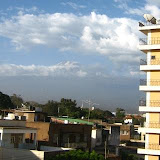
Kilimanjaro definitely exceeded all expectations, It was beautiful, but I guess I didn't really know what to expect before I got there. I thought there wouldn't be much snow, but the glaciers were pretty legitimate, no California 'glaciers' here, but I also thought crampons etc would be necessary, not so much. It was really just a big hike, but pretty different than your average backpacking trip..
So things I noticed:
Luxury:
I am not used to having my bag carried for me and all my meals cooked and brought to me in my tent while I rested.. and I went with a 'budget' operator. Felt a little awkward watching my backpack go up the trail with my stuff in it, but saving 2% of the total cost so I could carry it didn't really seem worth it. (Does every porter in the world smoke cigarettes?) There were about 3-4 people supporting each client on the mountain (guides, porters, etc).
It wasn't really that tough of a hike:
I think the altitude gets a lot of people, but since I was in Ethiopia at 9,000ft for the previous three months it wasn't much of a problem for me. I was at camp most days before 2pm and I think I gained weight with all the good food I was eating. The summit day was tough, but overall it was very enjoyable.
Obama:
My first night on the mountain happened to coincide with the Obama inauguration. I thought I was going to miss the speech, but my cook had a portable radio with him, and I listened to the historic speech huddled in the cold at 7000ft listening to el presidente with some locals 6000 miles from Washington DC who were as rapt as I was.. pretty memorable.
 |
| Kilimanjaro |
So things I noticed:
Luxury:
I am not used to having my bag carried for me and all my meals cooked and brought to me in my tent while I rested.. and I went with a 'budget' operator. Felt a little awkward watching my backpack go up the trail with my stuff in it, but saving 2% of the total cost so I could carry it didn't really seem worth it. (Does every porter in the world smoke cigarettes?) There were about 3-4 people supporting each client on the mountain (guides, porters, etc).
It wasn't really that tough of a hike:
I think the altitude gets a lot of people, but since I was in Ethiopia at 9,000ft for the previous three months it wasn't much of a problem for me. I was at camp most days before 2pm and I think I gained weight with all the good food I was eating. The summit day was tough, but overall it was very enjoyable.
Obama:
My first night on the mountain happened to coincide with the Obama inauguration. I thought I was going to miss the speech, but my cook had a portable radio with him, and I listened to the historic speech huddled in the cold at 7000ft listening to el presidente with some locals 6000 miles from Washington DC who were as rapt as I was.. pretty memorable.
Friday, February 13, 2009
Zanzibar
I'm on Zanzibar!

I don't think I knew Zanzibar was a real place. I thought it was one of those made up places whose name is meant to evoke the ends of the earth, like Timbuktu or something.. even being here it doesn't seem quite real; turquoise water (SCUBA not surfing), powdery white sand, dhows, spice plantations, etc.
A nice place to visit. I was able to have my visit coincide with the Sauti Za
Busara (words of wisdom) Music Festival as well [www.busaramusic.org/]; East African music festival, big party in an old fort with really great music, good times.. Stonetown itself is really cool as well, a historic city (carved doors, sultans, tiny twisting alleys that sooner or later end up on the beach..
Zanzibar

I don't think I knew Zanzibar was a real place. I thought it was one of those made up places whose name is meant to evoke the ends of the earth, like Timbuktu or something.. even being here it doesn't seem quite real; turquoise water (SCUBA not surfing), powdery white sand, dhows, spice plantations, etc.
A nice place to visit. I was able to have my visit coincide with the Sauti Za

Busara (words of wisdom) Music Festival as well [www.busaramusic.org/]; East African music festival, big party in an old fort with really great music, good times.. Stonetown itself is really cool as well, a historic city (carved doors, sultans, tiny twisting alleys that sooner or later end up on the beach..
Zanzibar

Wednesday, February 11, 2009
Swahili Time

There are a number of boats one can to get from Pemba to Zanzibar. The "fast ferry" takes 2 1/2 hours, and costs 45 dollars (well it costs $45 for wazungu, about 10 for locals). My plan was to take a slower boat ($20, 4.5 hours).. So I arrive in the port town the night before, find the one (awesome) guesthouse on a hill overlooking the water, and in talking to people there find out that there is another boat that isn't really advertised to tourists that is even cheaper, though it is slow and it leaves in the middle of the night and gets to Stonetown in the morning. So I go down to the port to check it out, and amazingly there is a stand right there selling tickets. I pay slightly more than locals ($11 instead of $8), there is some confusion about how much to charge me, and the woman gives me an official looking ticket with only a couple things scratched out in pencil, and writes in the check-in box: 18:00, and departs: 9:00..
But I am getting ahead of myself. I should first explain that in Tanzania (and I believe Kenya and other places) there is something called "Swahili Time". It is not a state of mind like "island time" or "african time" where everything is late (though things are often late). There is actually an alternate clock where our 6am is 12:00, it is still a 24hour system, but everything is off by 6 hours. They actually do the same thing in Ethiopia (Habesha Time), but they had a different calendar and everything (13 months in a year, and they were like 7 years behind). However in Ethiopia they were a lot more consistent about it, when people told you times, especially if it was in Amharic it was usually Habesha Time. In Tanzania the problem is lack of consistency (it's not that hard to add or subtract six hours, but you have to know when to do it). Here I think people are a little more wazungu focused, so they try to help you out by converting, but when language is an issue it can be a little confusing..
So when the person selling ferry tickets indicated that it departed at 9:00, I tried to clarify. My strategy is usually to say the number in the local language indicating Swahili or Habesha Time, and say the corresponding time in English, but with my poor Swahili, it can be hard to tell if everyone is on the same page. I tried to confirm the departure time (The check in time made no sense to me, it was at least 3 hours prior and may have been 9). I had been told that it left in the middle of the night and got there in the morning, so eventually I came to the conclusion that it left at 3am. So I went back to the guesthouse, and even confirmed with a kid working there, and settled in for a 3am departure, set my alarm for 1:30 (there really didn't seem to be a reason to 'check-in' too early) and mentally prepared myself for a restless night..
I was reading a John Grisham book on a lounge chair at 9:15 when the owner of the guesthouse comes running up to me a little frantic, telling me I am going to miss the boat. It was in fact scheduled to leave at 9:00pm, and though we could see it was still at the dock from our vantage point, it was to be leaving at any moment! So I drop the book, grab my backpack, hoped I had everything (no electricity, so no lights) and I run down the hill towards the town. My bag is heavy, so it turns into more of a determined walk, but thankfully the owner comes after me on a moped; I jump on the back, and we speed down all the way down the jetty to the ferry.
The boat doesn't actually end up leaving until around 10 o'clock, and I'm not sure I learned anything from the experience. Usually six hours is enough to make it fairly obvious which time is in question, but not always.. The night on the boat wasn't even too bad. Being the only mzungu made me lots of friends. I did get into a delicate conversation about the book I was reading, Infidel (the coast and the islands in particular are very Muslim), someone even gave me a wicker-type mat and I was able to stretch out on the deck, and I slept most of the way. Ended up in Stonetown 9 hours (and only 50km) later, not too much the worse for wear, though I'm thinking of taking a faster boat back to the mainland..
Saturday, February 7, 2009
Thursday, February 5, 2009
TIA
This Is Africa:
So I am eating breakfast Monday morning (the morning after the SuperBowl) watching the news on television. It is tuned to a local channel (TBC, Tanzanias Broadcast Corporation??) but it's an English language broadcast picked up from a Russian station. The news seems pretty normal, at little Soviet centered (they were advertising an special on South Ossetia) but it’s enough to keep me occupied while I am eating my eggs. Then the sports news comes on (or "Sport" as the rest of the world seems to call it), so I expect to at least get a score from the game. The coverage was pretty indepth; it covered most of Europe's major soccer leagues, even got into track and field a little bit, but there wasn't even a mention of the Superbowl.. silly American.
The next day (I really don't like the Steeler's) I am taking a quick 5 hour ferry over to the island of Pemba in the Zanzibar Archipelago. The boat ride is pretty uneventful (there was a loud noise and a little smoke at one point, but evidently it was inconsequential) and as we are getting to our destination a man comes up to the deck I’m on, selling soap. Now this in itself is not unusual, one is never lacking opportunities to buy food, toothpaste, bed sheets, or anything else whether you are sitting on a bus or in a café. However what made this particular moment in capitalism auspicious was how many customers the guys had. In the 15 minutes he was selling his soap he probably had 20 customers, buying an average of 5 bars. I guess I’ll never know if it was great soap or a fantastic bargain because I didn’t buy any, but I can’t imagine the set of circumstances that caused so many people to purchase soap on the Pemba ferry…
So I am eating breakfast Monday morning (the morning after the SuperBowl) watching the news on television. It is tuned to a local channel (TBC, Tanzanias Broadcast Corporation??) but it's an English language broadcast picked up from a Russian station. The news seems pretty normal, at little Soviet centered (they were advertising an special on South Ossetia) but it’s enough to keep me occupied while I am eating my eggs. Then the sports news comes on (or "Sport" as the rest of the world seems to call it), so I expect to at least get a score from the game. The coverage was pretty indepth; it covered most of Europe's major soccer leagues, even got into track and field a little bit, but there wasn't even a mention of the Superbowl.. silly American.
The next day (I really don't like the Steeler's) I am taking a quick 5 hour ferry over to the island of Pemba in the Zanzibar Archipelago. The boat ride is pretty uneventful (there was a loud noise and a little smoke at one point, but evidently it was inconsequential) and as we are getting to our destination a man comes up to the deck I’m on, selling soap. Now this in itself is not unusual, one is never lacking opportunities to buy food, toothpaste, bed sheets, or anything else whether you are sitting on a bus or in a café. However what made this particular moment in capitalism auspicious was how many customers the guys had. In the 15 minutes he was selling his soap he probably had 20 customers, buying an average of 5 bars. I guess I’ll never know if it was great soap or a fantastic bargain because I didn’t buy any, but I can’t imagine the set of circumstances that caused so many people to purchase soap on the Pemba ferry…
Sunday, February 1, 2009
Superbowl Sunday Update
Trying to upload my Tanzania pictures, but not having much luck. I can't complain, the internet here is way better than it was in Ethiopia. I have been at the beach north of Pangani, and am now heading towards the islands (Zanzibar and Pemba).. if god wills the boat to arrive. I actually really like the town I am in (Tanga [pictured]) it is a pretty big city (for Tanzania) but it is really laid back, maybe because it is so hot, maybe it's because there aren't too many wazungu around.
I have been reading in the shade with the nice ocean breeze, etc.. I still have plenty of good books from my parents resupply that I don't have to worry about using up my good ones (that is a real thought I have sometimes, the bookexchanges are slimpickings around here) and I am building up my good karma by leaving good books for other people, so it should all work out.
Visited some caves today that are supposedly the biggest limestone cave network anywhere in the world, they were pretty impressive (see picture). I wasn't even planning on stopping he re, I have been doing the major tourist highlights (Serengeti, Kilimanjaro), after Zanzibar it will definitely be more off the beaten track, and I am looking forward to that. Hopefully Indian food will remain prevalent..
 am now heading towards the islands (Zanzibar and Pemba).. if god wills the boat to arrive. I actually really like the town I am in (Tanga [pictured]) it is a pretty big city (for Tanzania) but it is really laid back, maybe because it is so hot, maybe it's because there aren't too many wazungu around.
I have been reading in the shade with the nice ocean breeze, etc.. I still have plenty of good books from my parents resupply that I don't have to worry about using up my good ones (that is a real thought I have sometimes, the bookexchanges are slimpickings around here) and I am building up my good karma by leaving good books for other people, so it should all work out.
Visited some caves today that are supposedly the biggest limestone cave network anywhere in the world, they were pretty impressive (see picture). I wasn't even planning on stopping he
 re, I have been doing the major tourist highlights (Serengeti, Kilimanjaro), after Zanzibar it will definitely be more off the beaten track, and I am looking forward to that. Hopefully Indian food will remain prevalent..
Tuesday, January 27, 2009
Language Barriers
I've always thought I was bad at learning languages. I took Spanish classes for years to little effect. But maybe I should really be blaming Brent Lassow. I actually feel like I've done OK with Amharic and Swahili (and Amharic doesn't even use the Roman alphabet!)
I am pretty good at memorizing stuff, and despite what various Latinos might tell you, I'm not horrible with accents. I think the key to it all is really low expectations (the key to many of my successes). With both languages native speakers are so amazed that a white person is even trying to speak their language that it is met with appreciation. Plus, who knew Swahili was already inbedded in American culture (The Lion King), who knew Asante Samuel's mother was really thankful to someone named Sam..
Furthermore, I don't have to understand much of what they say (one of my biggest problems in Espanol) I just communicate with greetings and key words and try to pick up slang and popular expressions and people are usually impressed, in fact the positive feedback is probably one the reasons I make the effort (I hope all the condescending Spanish speakers are listening right now [you know who you are]).
I'm sure I will never be able to converse about politics or religion in either language, but even with my limited vocab I feel somewhat successful, and that is a pleasant surprise.
I am pretty good at memorizing stuff, and despite what various Latinos might tell you, I'm not horrible with accents. I think the key to it all is really low expectations (the key to many of my successes). With both languages native speakers are so amazed that a white person is even trying to speak their language that it is met with appreciation. Plus, who knew Swahili was already inbedded in American culture (The Lion King), who knew Asante Samuel's mother was really thankful to someone named Sam..
Furthermore, I don't have to understand much of what they say (one of my biggest problems in Espanol) I just communicate with greetings and key words and try to pick up slang and popular expressions and people are usually impressed, in fact the positive feedback is probably one the reasons I make the effort (I hope all the condescending Spanish speakers are listening right now [you know who you are]).
I'm sure I will never be able to converse about politics or religion in either language, but even with my limited vocab I feel somewhat successful, and that is a pleasant surprise.
Monday, January 26, 2009
Northern Ethio
Here are some pictures from the North of Ethiopia (My dad has more, I will link to them). If there is such thing as a tourist circuit in Ethiopia this is it, pretty amazing sites, still not very many white people:
Lalibela was amazing, the pictures don't do it justice. Churches carved out of the bedrock 800 years ago, intricate on the inside as on the out. Gonder had some nice castles, etc. The Simien Mountains were great, highly recommended. Felt like Jane Goodall sitting amongst the primates except at 12,000 ft (thinking of going to Gombe Stream NP in Tanzania to visit the famous chimps as well at some point).
Ethiopia is up there on the my list, the food is delicious and despite all the amazing things there, it is still pretty much off the traveler radar.. Go Now, they need the tourist dollars.
I am behind on the blog and headed toward the coast, so far so good.
 |
| Northern Ethiopia |
Lalibela was amazing, the pictures don't do it justice. Churches carved out of the bedrock 800 years ago, intricate on the inside as on the out. Gonder had some nice castles, etc. The Simien Mountains were great, highly recommended. Felt like Jane Goodall sitting amongst the primates except at 12,000 ft (thinking of going to Gombe Stream NP in Tanzania to visit the famous chimps as well at some point).
Ethiopia is up there on the my list, the food is delicious and despite all the amazing things there, it is still pretty much off the traveler radar.. Go Now, they need the tourist dollars.
I am behind on the blog and headed toward the coast, so far so good.
Saturday, January 17, 2009
EthioPhotos
updated
In Tanzania now... but here are some photos up to my last days in Addis..
Have been away from the internet in Northern Ethiopia and safariing in Tanzania, but will get back up to date.
In Tanzania now... but here are some photos up to my last days in Addis..
Have been away from the internet in Northern Ethiopia and safariing in Tanzania, but will get back up to date.
 |
| Ethio (Around Addis part 2) |
Tanganika

(Disclaimer, I've actually been here for a few weeks, but haven't really had the chance to get acclimated to the country. I've been on Safari, living well and looking at animals out in the bush. Now I am back to Africa, for real. I'm going up Kilimanjaro tomorrow, but this is what I got so far)
First Impressions of Tanzania:
More cows than Ethiopia. (Ethiopia had more sheep and goats)
Not that much English. Of course I didn't do much research before I came, (I have a hard time reading guidebooks before I actually get to the place), but for some reason I thought English would be widely spoken. Not so much.
Sticker kits on the minibuses (called dalla dallas here)! The decals on the vantaxis are on a whole nother level. Full 10 piece kits with matching InshallAllah decals, rappers (Jay Z, Tupac, 50 Cent, Obama(see picture), Hakuna Matada, etc. Ethiopia's had some stickers, the most popular ones were Manchester United and Arsenal, but they have nothing on these. Now I can finally ride in the style that I am accustomed.
Indian food! Evidently there is a sizeable Indian population which is needless to say is awesome on the culinary front. Three out of the four dinners I've eaten here have been representing the subcontinent.
Not very mountainous (at least compared to Ethio), you'd think because Kilimanjaro is the tallest mountain in Africa it would be pretty hilly (or at least I would think this), but it is really pretty flat except for a couple other scattered volcanoes.. which leads to my next observation.
Bicycles! I think because it is flat they are a great way to get around (I have not had the chance to do any riding myself yet), or maybe people in Ethiopia are just too poor or they would have bikes too. We even visited a bike-not-bombs recipient here which was great.
more animals. (more on that later)
Maasai ('')
Saturday, January 3, 2009
Animals I've Seen in Ethiopia
Here is a list (in no particular order) of animals I've seen in Ethiopia:
vervet monkeys
Geldas (baboons?) (endemic)
hippos
oryx
klipspringers
Walia Ibex (endemic)
warthogs
jackal
dik diks
crocodiles
hamadryas baboons
birds
domestic animals (horses, cows, sheep, goats, donkeys, mules, cats,
dogs, cows, camels, etc)
a lion in a cage doesn't count (will have to wait for Tanzania)
Just finished a whirlwind trip through Northern Ethiopia, and we are
back in Addis for one night only. Got in a fight with a taxi driver
today, good to be back in Addis, seriously.
Tanzania tomorrow.
Subscribe to:
Comments (Atom)